
Foreign banks set the template in consumer banking in its infancy, but have almost vacated this booming space.
US bank Citigroup on Wednesday announced the sale of its Indian consumer banking businesses, including credit cards, retail banking, wealth management and consumer loans, to private lender Axis Bank for Rs 12,325 crore, as part of its plans to exit retail operations in 13 markets.

In the case of Iran, the lifting of sanctions has paved the way for direct relations.
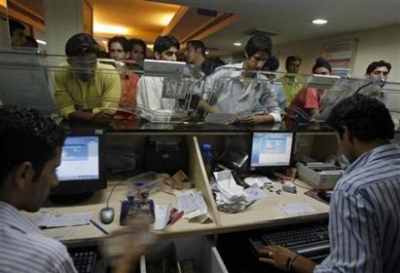
The spike at private sector lenders like ICICI Bank and Axis Bank follows a push to grab market share from India's dominant state banks.

'It's a toss-up between a fire sale of equity or merger with a strong bank,' points out Tamal Bandyopadhyay.
Shares of most European banks are down significantly.

Valued at $71.2 billion, the bank's market capitalisation is more than that of global banks like Barclays, JP Morgan Chase and Credit Suisse.

Unlike in the past, when old private banks compromised upon underwriting standards to take on the bulk, they've now realised that scaling up at the cost of quality isn't worth the while. These banks have also readjusted growth targets when required, and rebalanced books to preserve capital and asset quality.

Loan rates will change at the next reset, while deposit rates will continue till maturity.

Unlike the race to buy airwaves by telecom companies, airports by infrastructure companies and city gas networks by energy companies, the race to develop super apps by consumer-facing companies in India has not brushed up against any regulatory issues. Officials at the ministry of electronics and information technology and at other regulators are happy they do not have to meddle in who among the Tata group, Reliance Industries Ltd, Flipkart or Paytm will manage to build an app that sweeps in customers. Unlike separate apps a customer uses on her mobile to order groceries, buy food or airline tickets or just make payments, a super app can perform all these functions.

Sugarcane dues accruing to farmers rose to almost Rs 21,321 crore as of May 2021. Of that Rs 18,820 crore is for the cane supplied in the current season, which will end in September, while the remaining Rs 2,501 crore is from previous years. Of the pending sugarcane dues of 2020-21, almost 63 per cent accrues to the poll-bound state of Uttar Pradesh. The remaining are from Maharashtra and others.

'SBI is already too big. Too big to fail.' 'It already is a moral hazard. What will it do with 20,000 branches that it cannot do with 14,000, especially in these days of online and mobile banking?'

Use this window to lock into bank FDs; unless govt cuts small savings rates, banks may not cut deposit rates

A Reuters poll had forecast retail inflation would slow to 8.35 percent from an annual 8.79 percent in January.

Over the past 25 years the MF industry has come a long way. Geographic reach has increased, many more customers have been added, more channels have been opened up and the product basket is full.

Key events that rocked India Inc in 2014 and one of them is Vishal Sikka taking over reins at Infosys.

Shocks from Brexit could also hurt one of China's biggest export markets.

China's economy grew 6.7 percent in the second quarter from a year earlier.

Economic growth in the last two years has stayed above seven per cent.

Most large fund houses, such as HDFC MF, ICICI Prudential AMC, Reliance MF, Reliance MF, Birla SunLife MF and SBI MF, have the backing of large banks or financial institutions, giving them reach and understanding, they say.

Experts hail Budget 2015 as a progressive, growth oriented one.
 © 2026 Rediff.com - Advertise with us - Disclaimer - Privacy Policy - Sitemap - Feedback - About us - Terms of use - Grievances